Play-Doh
1 product on the list · 1 Compliance-stated
About the brand
Play-Doh began as a wallpaper cleaner made in Cincinnati, Ohio, in the 1930s by Kutol; it was reworked and marketed to Cincinnati schools in the mid-1950s after nursery teacher Kay Zufall found children liked playing with it. In 1956 the McVickers established Rainbow Crafts in Cincinnati to manufacture and sell the putty, which Joseph McVicker named Play-Doh, first demonstrated and sold in the toy department of Woodward & Lothrop in Washington, D.C. Ownership passed Rainbow Crafts (1956–1971) to Kenner (1971–1991) to Hasbro (since 1991). The original formula remains a trade secret; Hasbro admits only that it remains primarily a water-, salt-, and flour-based product. No homepage link is published on this page: Hasbro's printed brand address (www.PLAYDOH.com) did not resolve in this research, and Hasbro's current brand URL redirects to a where-to-buy page, not a brand homepage. Source: Play-Doh history (secondary).
What the brand publishes
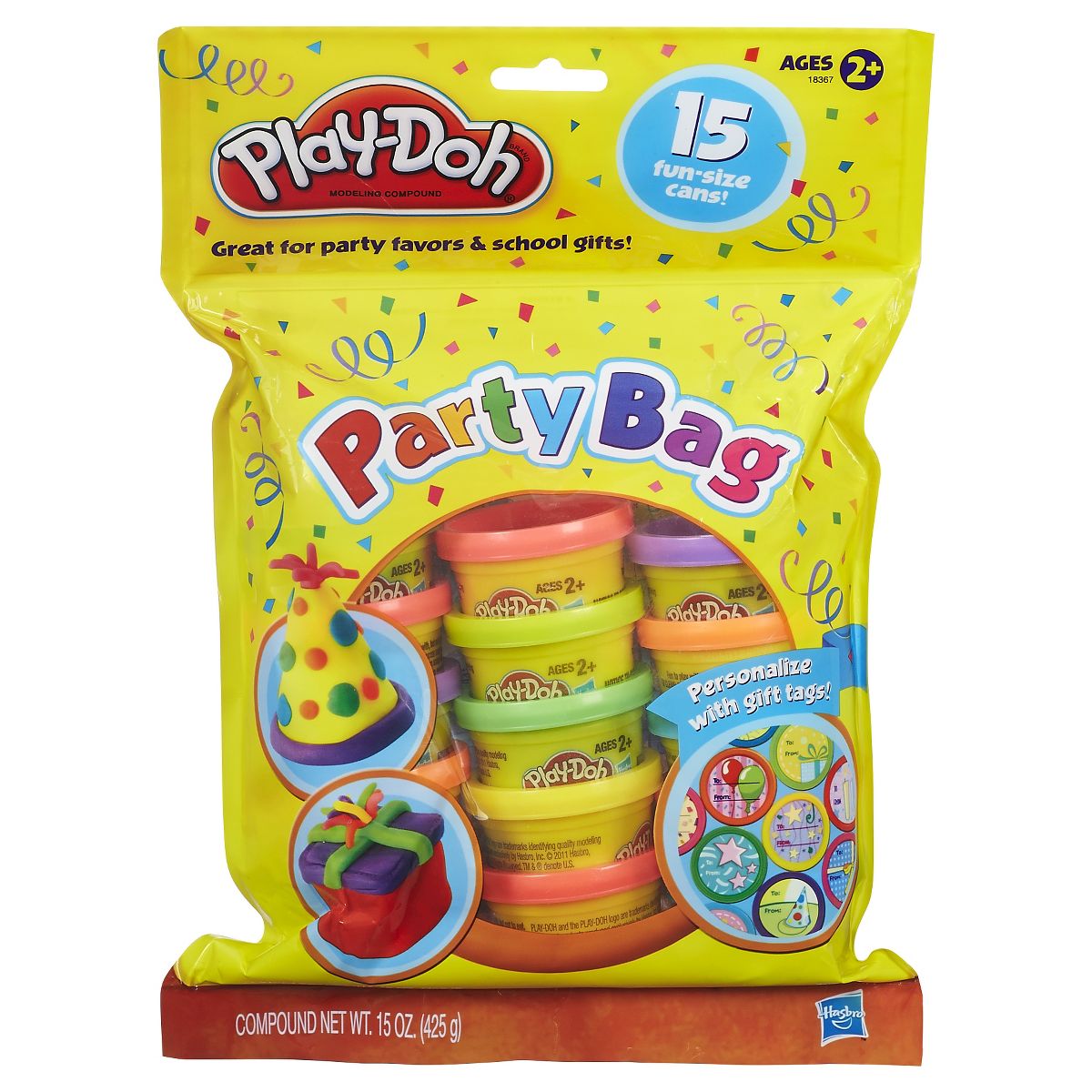
Hasbro Play-Doh product pages repeat a bare testing claim — the compound “goes through vigorous testing” before it goes on the market — with no program structure, lab, frequency, or standard named in that sentence. For the modeling-compound class generally, sibling Hasbro pages state “Non-Toxic. Conforms to: ASTM D-4236.” One tension is preserved: the listed Party Bag's own Hasbro page states only “NOTICE TO PARENTS: CONTAINS WHEAT. NONTOXIC.” without the D-4236 line, so this page does not claim the listed item's page itself states it. No ASTM F963, CPSIA, or EN 71 claim for the compound was found — correctly, since it is an art material assessed under D-4236, not a toy under F963 — and no lab is named. Sources: Hasbro Play-Doh bulk can page, Hasbro Play-Doh 8-pack page.
The honest caveats
No recall found in this pass
No Play-Doh CPSC recall was found in this research pass; that is a search result, not a certified complete recall history. Hasbro recalls for other brands are not attributed to Play-Doh here.